
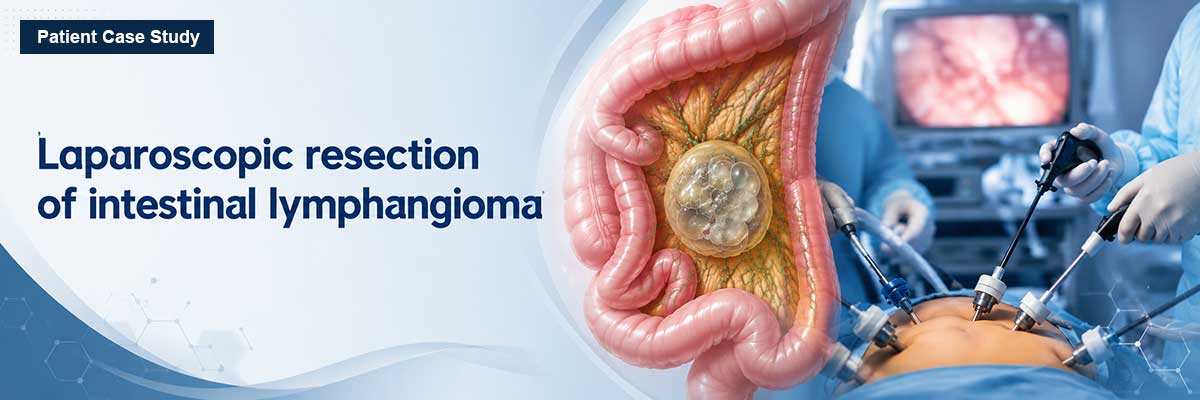
A 48 year old gentleman presented to us with an incidental finding of cystic tumor in the small intestine mesentery (a continuous, fan-shaped fat fold in the abdomen that attaches the intestines to the back wall of the belly); on ultrasonography of the abdomen performed as part of routine health check up. CT scan suggested the cystic tumor to be a lymphangioma (benign tumor of lymphatics) and it was engulfing the terminal portion of small intestine causing its narrowing. He underwent a laparoscopic resection of tumor along with terminal part of small intestine and proximal part of large intestine (ileocecal resection) followed by a laparoscopic ileocolic anastomosis. Patient was discharged on 5th postoperative day.
Small intestinal lymphangioma is an exceedingly rare, benign (non cancerous) malformation of the lymphatic system that can cause intestinal stenosis. It is characterized by dilated cystic spaces. When these lesions grow in the bowel wall or mesentery, they compress the lumen, leading to abdominal pain, bowel obstruction or intussusception.
Most lymphangiomas in the body occur in the head and neck, while gastrointestinal involvement is rare. When it occurs, it primarily affects the jejunum, ileum or the mesentery.
Intestinal lymphangiomas are usually asymptomatic. However the tumor can grow directly into the intestinal wall or act as an extrinsic, external mass that compresses the small bowel. This mass effect narrows the lumen, restricting the passage of food and fluid, which causes small intestinal stenosis.
Identifying a small intestinal lymphangioma pre-surgery can be challenging due to its non-specific symptoms. Standard diagnostic evaluations include CT scan or MRI of the abdomen often reveals a cystic, fluid-filled mass compressing the intestine or a localized stricture. A Double-balloon enteroscopy or capsule endoscopy can visualize the lesion if it is in the mucosal layer. A definitive diagnosis can be confirmed via tissue analysis only after removal.
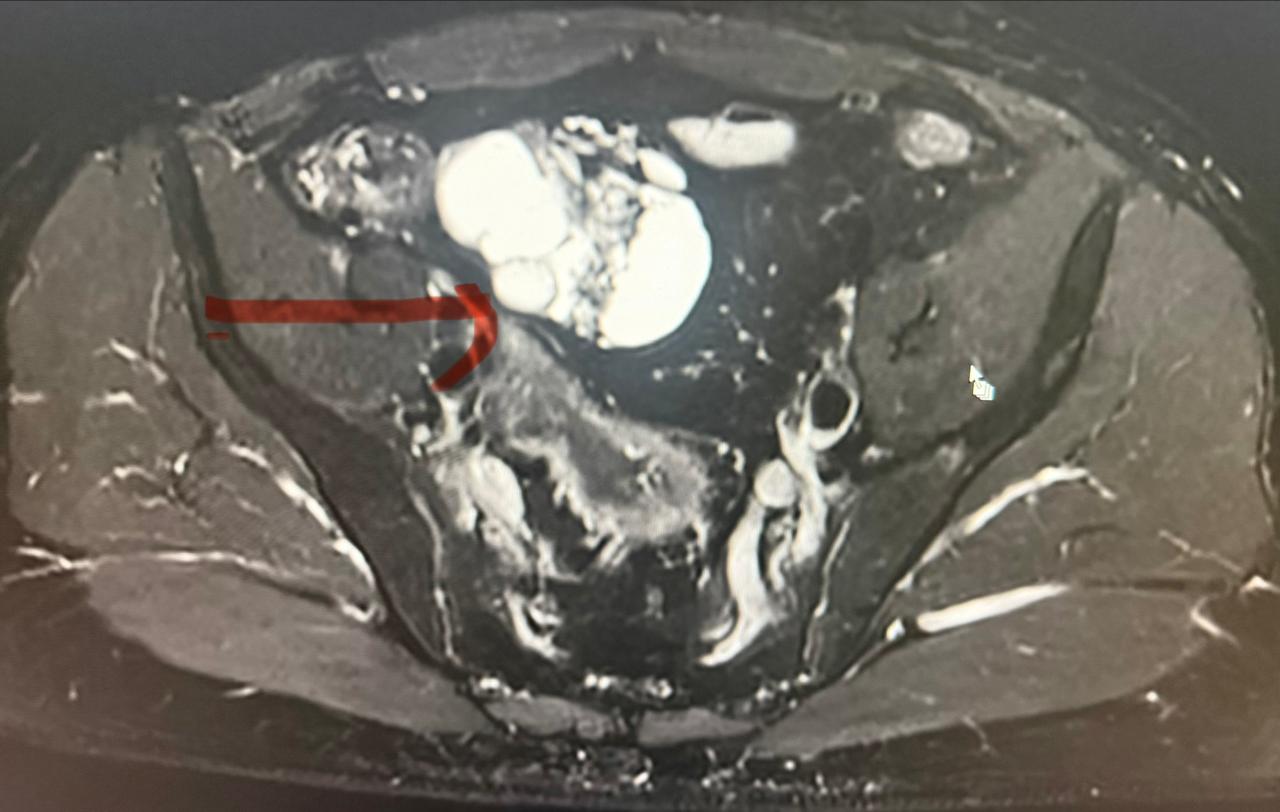
Axial MRI showing cystic mesenteric lymphangioma compressing the terminal ileum.
Coronal MRI demonstrating the extent of the intestinal lymphangioma before surgery.
Because big intestinal lymphangioma can cause intestinal obstructions or volvulus (twisting of the intestine), surgical resection of lymphanhioma along with the strictured segment of the small bowel. In some cases where the tumor is purely external (mesenteric), the cystic mass can be safely "shelled out" without removing the intestine. The long term outcome is excellent.
For more information on gastric cancer, meet
Dr D R Kulkarni
Consultant GI & HPB Surgeon, Mumbai
Chairman:
Liver & Pancreas Clinic (LPC) Mumbai
Center for Digestive Surgery (CDS) Mumbai